
I've cooked a lot of dry chicken. The kind that makes you reach for water mid-bite. The fix almost always comes down to one thing: the chicken brine ratio. Get that salt-to-water number right and you're 80% of the way to juicy meat. Get it wrong and you're either eating a salt lick or wasting your time.
Here's the short version before we dig in. A wet brine for chicken works best at 5% salt by weight — that's about 50 grams of kosher salt per liter of water. Most recipes say "1 cup salt per gallon," and honestly, that's roughly in the ballpark. But weight beats volume every single time.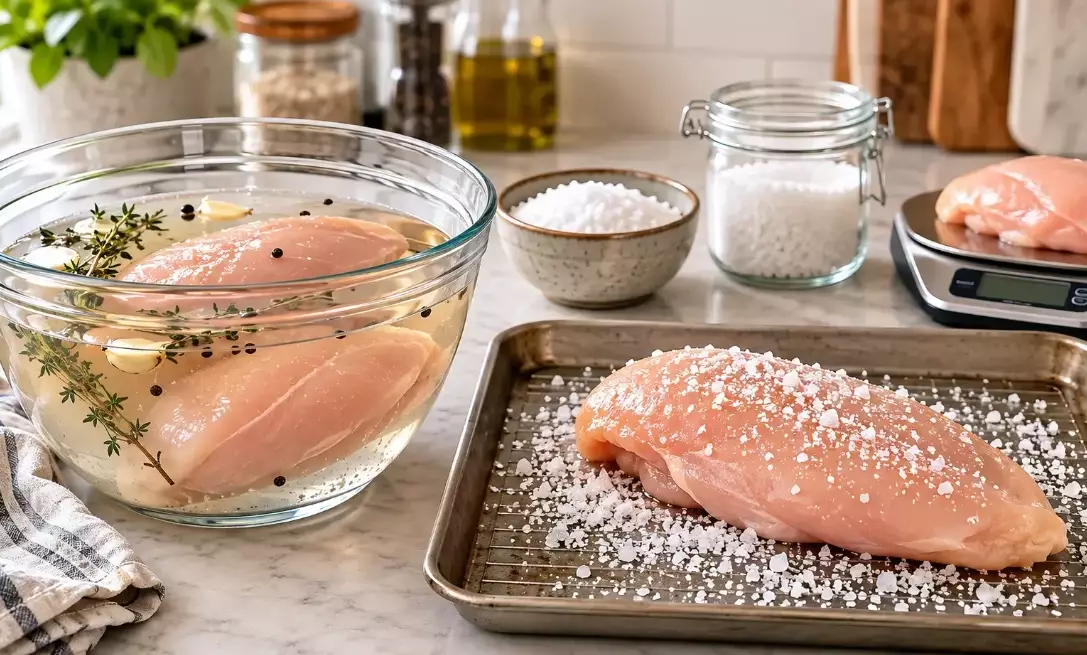
Quick Jump — What You'll Find Here
What Is the Correct Chicken Brine Ratio?
Salt and water. That's it. But the ratio matters more than the technique. I've tested brines from a weak 2% all the way up to a 10% solution, and the sweet spot sits at 5% to 6% salt by weight.
Let me break that down in real kitchen terms.
- 5% brine: 50g kosher salt per 1 liter (about 4 cups) cold water
- 6% brine: 60g salt per 1 liter water — my pick for whole birds
- 3% brine: 30g per liter — good for quick brines or delicate cuts like chicken breast
Why weight and not cups? Because salt crystal size varies wildly. A cup of Diamond Crystal kosher salt weighs about 140g. A cup of Morton kosher salt weighs closer to 200g. Same volume, totally different brine. That's the first trap I fell into years ago. My chicken came out borderline inedible because I used Morton and assumed all kosher salt was the same.
Use a digital scale. It costs less than a decent bottle of wine and saves you from this exact problem.
My rule after years of testing: Weigh the water. Weigh the salt. Don't eyeball either one. If you're brining a whole chicken (around 1.5–2 kg), you need about 2 liters of water and 100–120g of salt to fully submerge it in a pot or bag.
How Does Brine Concentration Change the Meat?
Salt does two things inside chicken muscle tissue. It dissolves proteins (mainly myosin) so they hold onto moisture during cooking, and it seasons the meat from the inside out.
At 5% concentration, the salt uptake happens at a steady rate. After about 4 hours in the fridge, a chicken breast gains roughly 6–8% of its weight in moisture. A whole bird takes longer — usually 8 to 12 hours to hit full saturation.
Push that ratio to 8% or higher and something shifts. The exterior of the meat starts curing. You get a firmer, almost ham-like texture on the skin and outer layer. I tried an 8% brine on chicken thighs once, out of curiosity. The meat was seasoned but the texture was off — slightly rubbery toward the surface. Not worth it.
Drop below 3% and you're basically soaking chicken in salty water for no reason. It adds minimal moisture and almost no flavor. Waste of fridge space.
The Brine Ratio Cheat Sheet
| Brine Strength | Salt per 1L Water | Best For | Brine Time (Fridge) |
|---|---|---|---|
| 3% (light) | 30g | Chicken breast, quick brines | 2–4 hours |
| 5% (standard) | 50g | Wings, thighs, drumsticks | 4–6 hours |
| 6% (robust) | 60g | Whole chicken, roasting parts | 8–12 hours |
| 8% (aggressive) | 80g | Not recommended for chicken | — |
Notice I left a row for aggressive brines. It's there so you can see the ceiling. Above 6% and you're in pickle territory, not brine territory. Save that for pork shoulder or corned beef.
If you want a deeper dive into the food science behind salt and muscle proteins, the USDA Food Safety and Inspection Service has solid published guidance on brining and curing safety parameters. I keep their guidelines bookmarked because fridge temperature and brine time are food-safety issues, not just flavor issues.
How Long Should You Brine Chicken?
Time and concentration work together. A 5% brine for 12 hours will taste saltier than a 5% brine for 4 hours. The meat keeps absorbing salt for as long as it sits in the solution.
Here's what I do in my own kitchen, based on a 5–6% brine:
- Chicken breasts (boneless, thin): 2 hours. Anymore and the texture gets spongy.
- Wings and drumsticks: 4 to 6 hours. Overnight is fine but not necessary.
- Whole chicken: 8 to 10 hours. I usually start it the night before and roast it for dinner the next day.
One thing nobody tells you: brine time starts when the chicken goes in the fridge, not when you start prepping. Sounds obvious, but I've seen people leave a bird on the counter for an hour before chilling it. That's a food safety risk, not a brining strategy.
Also, always brine in the fridge at 40°F (4°C) or below. The FDA is clear on cold-holding temps for raw poultry, and a warm brine is basically a bacterial incubator.
Common Mistakes With Chicken Brine Ratios
The biggest mistake? Using table salt instead of kosher or sea salt. Iodized table salt has much finer crystals and dissolves differently. A 5% brine made with table salt feels saltier on the tongue because the crystals pack more densely by volume.
Second mistake: brining a "self-basting" or "enhanced" chicken. Check the label. Many supermarket birds are already injected with a salt solution. Brine one of those and you'll end up with meat that tastes like ocean water. I've made this mistake exactly once. The chicken was inedible.
Third: skipping the rinse. After brining, pull the chicken out and give it a quick rinse under cold water. Pat it dry thoroughly. If you don't dry the skin, it will steam instead of roast, and you'll lose that crispy texture. I learned that from a pitmaster at a local BBQ joint who brines his birds for competition. His exact words: "Wet skin is the enemy."
Non-consensus tip from my own failures: Don't add sugar to your chicken brine unless you're making a specific sweet-glazed recipe. Sugar adds flavor but also promotes browning at lower temperatures, and on a whole chicken, it can cause the skin to burn before the thighs are cooked through. I've stopped adding sugar entirely and the results are cleaner-tasting.
FAQ: Chicken Brine Ratio
This guide reflects personal kitchen testing and cross-referenced food safety guidance from the USDA and FDA. Salt weights were measured on a digital scale to within 1 gram.


Leave a Comment