I’ve been making slow cooker shredded chicken for years—probably over 200 batches. And I’ll be honest: my first few attempts were terrible. Dry, stringy, bland. The kind of thing you drown in sauce to make edible.
But after a lot of trial and error (and a few arguments with my Instant Pot–loving friend), I landed on a method that works every single time. It’s not fancy. No special gadgets. Just a slow cooker, chicken, and a few key techniques that most recipes skip.
This guide is everything I wish I’d known earlier—the exact cook times, the moisture trick that actually works, and how to fix it when things go wrong. Let’s get into it.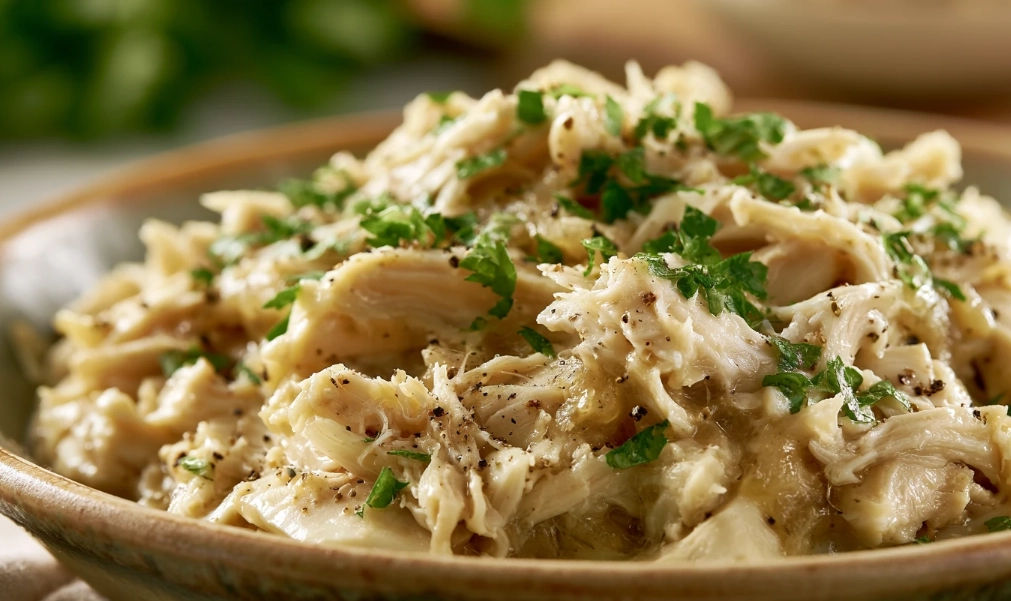
What’s Inside (Tap to Jump)
Which chicken cut gives the best shred?
Boneless, skinless chicken thighs win. Every time. Breasts work, but they dry out faster and have less forgiving collagen. Thighs stay juicy even if you leave them in an extra hour. That’s the kind of buffer you want on a busy Tuesday.
I buy a 2-pound pack of thighs from Trader Joe’s (usually around $6–7). If you only have breasts, fine—but reduce the cook time and add extra fat (more on that below).
| Cut | Cook Time (Low) | Moisture Level | Shred Quality |
|---|---|---|---|
| Boneless thighs | 6–7 hours | High | Juicy, tender strands |
| Boneless breasts | 4–5 hours | Medium | Can be stringy if overcooked |
| Bone-in thighs | 7–8 hours | Very high | Rich, but requires de-boning |
One non-consensus tip: don’t trim all the fat. A little bit of visible fat renders down and bastes the meat. I leave about 10% of the fat cap on. It makes a noticeable difference.
My step-by-step method (with exact times)
Here’s the exact sequence I follow. I’ve tested this with a 6-quart Crock-Pot and a 4-quart off-brand one—both work.
1 Layer the bottom. Thinly slice half an onion and lay it down first. This keeps the chicken off the direct heat and adds aroma.
2 Season the chicken. Pat dry with paper towels (yes, even for slow cooking). Rub with 1 teaspoon kosher salt per pound and a splash of olive oil. I use about 1.5 teaspoons total for 2 pounds.
3 Add liquid—but not too much. Pour in 1/2 cup of low-sodium broth (chicken or veggie). That’s it. More liquid = boiled, flavorless meat.
4 Cook on low for 6 hours. No peeking. Every time you open the lid, you lose 20 minutes of heat.
5 Shred in the pot. Use two forks to pull the chicken apart right in the juices. It soaks up moisture as you go.
That’s the core. But the real magic happens with seasoning—next section.
Seasoning secrets that actually penetrate
Most recipes tell you to dump in a bottle of BBQ sauce. That works, but it tastes like bottled BBQ sauce. I prefer to build flavor in layers.
My go-to base: 1 teaspoon smoked paprika, 1/2 teaspoon garlic powder, 1/2 teaspoon onion powder, and a pinch of cayenne. Mix that with the salt before rubbing it on the chicken. The spices bloom in the fat and liquid.
If you’re making a specific cuisine, adjust: taco night gets cumin and chili powder; Asian-style gets soy sauce and ginger; Greek gets lemon zest and oregano. But always finish with acid.
3 mistakes that ruin shredded chicken
I’ve made all three. Learn from my pain.
- Adding too much liquid. People think slow cookers need a swimming pool. They don’t. 1/2 cup is plenty for 2 pounds. The chicken releases its own juices.
- Cooking on high for 4 hours. It works in a pinch, but the texture is tougher and less uniform. Low and slow is worth the wait.
- Shredding with a mixer. I tried the stand-mixer trick once. It turned the chicken into a paste. Use forks. It takes 2 minutes.
One more subtle mistake: not letting the chicken rest for 10 minutes before shredding. Resting lets the juices redistribute. If you shred immediately, half the moisture ends up on the cutting board.
How to rescue dry, overcooked chicken
It happens. Maybe you forgot the timer, or the chicken was thinner than expected. Don’t toss it.
Here’s my rescue plan: add 2 tablespoons of broth or water per cup of shredded chicken. Cover with a lid and microwave for 30 seconds. Then add a tablespoon of fat—olive oil, butter, or even a spoonful of mayo. Toss well. The fat coats the strands and makes them taste juicy again.
If the chicken is really far gone (like, chalky), pulse it in a food processor with a splash of broth until it’s a rough paste. Use it for enchiladas or chicken salad—no one will know.
Real questions from home cooks
My slow cooker shredded chicken always tastes bland. What am I missing?
Salt early and use enough of it. I weigh my salt—about 1.5% of the chicken’s weight. For 2 pounds (907g), that’s roughly 13–14 grams of kosher salt. Sounds like a lot, but it’s the difference between flavorful and flat. Also, add acid at the end. That’s the secret weapon.
Can I put frozen chicken directly in the slow cooker?
You can, but you shouldn’t. Frozen chicken stays in the “danger zone” (40–140°F) too long, which is a food safety risk. Thaw overnight in the fridge. If you’re in a rush, use the defrost setting on your microwave and cook immediately. I’ve done the frozen thing once—the texture was mushy and uneven.
How long does leftover slow cooker shredded chicken last in the fridge?
Four days, max. But here’s the thing: it dries out in the fridge. Store it with a few tablespoons of its own cooking liquid. Reheat gently with a splash of broth. I’ve kept it for five days before and it was fine, but I wouldn’t push it further.
Can I double the recipe in a 6-quart slow cooker?
Yes, up to 4 pounds of chicken. But don’t double the liquid—use 3/4 cup instead of 1 cup. And add 1 extra hour of cook time on low. The pot will be fuller, so it takes longer to heat through. I’ve done 4 pounds in my 6-quart many times for meal prep.
That’s the whole playbook. No fluff, just the method I rely on. If you try it and something goes sideways, let me know—I’ve probably made that mistake too.
Fact-checked against USDA guidelines for poultry safety and tested in a home kitchen with both 4-quart and 6-quart slow cookers.

Leave a Comment