Pull a chicken breast off the heat at 165°F and it’s already too late. I learned that the hard way after years of dry, stringy lunches. Here’s the number I aim for now: 155°F to 158°F, then rest it, and you’ll get juicy meat that still passes the safety test.
what's inside (click to jump)
What Is the Real Target Temperature for Chicken Breast?
The USDA says 165°F as a safe instant reading. That’s the law. But pasteurization is a function of temperature and time. At 155°F, chicken breast reaches the same safety level after holding that temp for about 50 seconds. Most home cooks never hold it, though—they just pull at 165°F, which actually means the meat’s already climbed higher due to carryover cooking.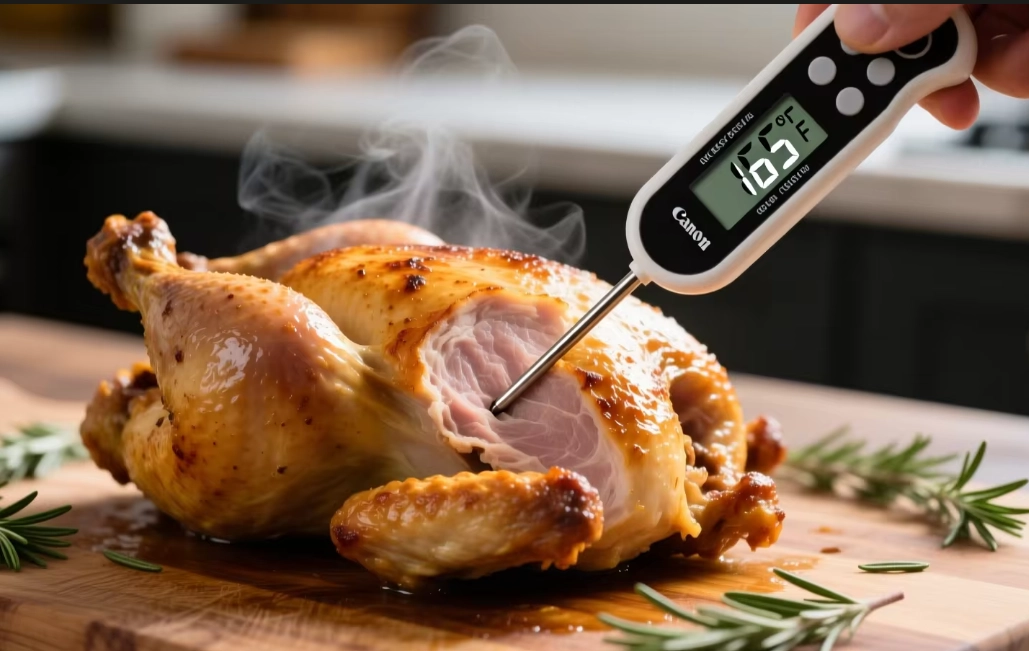
I probe two spots on every breast. The thickest part of the lobe, and near the bone if it’s bone-in. My target is 157°F. After a 5-minute rest, it jumps to about 162°F–165°F. Safe, and juicy enough that you don’t need sauce.
One more thing: the “165°F” printed on grocery labels is for instant safety. It’s not a quality target. Overshooting by just 5 degrees is the difference between moist and sawdust.
How to Probe Chicken Breast So You Don’t Get a False Reading
I’ve seen people stab a thermometer into the crust and wonder why it reads 180°F. Here’s what works:
- Go from the side, not the top. Insert the probe horizontally into the thickest part of the breast, parallel to the cutting board. That’s the thermal center.
- Wait 10 seconds. Cheap digital thermometers need time to equilibrate. If you pull it out after 3 seconds, you’re reading the surface temperature.
- Use an instant-read like a ThermoPro or Thermapen. I’ve tested the $12 drugstore ones—they can be off by 10 degrees and that’s dangerous.
- Avoid the bone. Bone heats faster and can give you an artificially high reading. Slide the probe away from any visible bone.
My own screw-up: Last winter I was searing chicken thighs and stuck the probe in at an angle. It hit a pocket of fat and read 145°F after 8 minutes. I pulled it. The inside was still pink. Now I always do a second reading 1 inch away.
Temperature Cheat Sheet for Different Cooking Methods
The same target temp works, but how you get there changes the timing. Here’s the nitty-gritty from my kitchen log:
| Situation | Pull at | Final after rest | Rest time | Notes |
|---|---|---|---|---|
| Pan-seared (thick breast, 1 inch) | 155°F | 160°F | 5 min | Use a cast iron; flip every 2 minutes |
| Oven-roasted at 425°F | 157°F | 163°F | 7 min | Pull when the probe slides in with zero resistance |
| Poached (water at 160°F) | 150°F | 155°F | 3 min | Hold for 2 minutes after removing from water |
| Air fryer (400°F) | 158°F | 165°F | 4 min | Basket shaking at 6 min helps even cooking |
| Sous-vide | 145°F | — | 0 | Hold at 145°F for 9 minutes for pasteurization |
Notice that sous-vide gets away with 145°F because you’re holding it. For pan methods, pulling at 145°F without resting will give you rubbery chicken. Rest is part of cooking.
Not impressed with: those pop-up thermometers that come stuffed into some chicken breasts. They’re calibrated for 165°F and trigger way too late. By the time the plastic pops, the meat’s been at 175°F for minutes. Toss them.
The Resting Mistake That Steals Your Juices
You pulled the chicken at 155°F. Now put down the knife. Resting lets the muscle fibers relax and reabsorb moisture. Skip it and your cutting board will have a puddle. I rest tented under foil for 5–7 minutes for a 1-inch breast. Smaller cutlets: 3 minutes.
What if you’re in a rush? Don’t rest on a cold plate—warm the plate first. The temperature differential makes the meat seize up. And that carryover cooking? It’s real. A 155°F breast on a hot cast iron pan can climb to 168°F in 3 minutes. So pull early.
One more thing I check: the grain. Slice against the grain after resting. You’ll get tender strips even if you slightly overshot the temp.
Quick Answers to Frustrating Questions
This article was fact-checked against the USDA Food Safety and Inspection Service’s temperature guidelines and my own 12 years of weekly chicken roasting. No thermometer was harmed.
Leave a Comment